

Pseudomugil furcatus deserves every bit of admiration it receives in the aquarium world. Known as the Forktail Blue Eye, this tiny fish carries a surprising amount of presence, almost as if a fragment of sunlight had been given fins and a restless spirit. Aquarists often describe their first encounter with the species as a moment of quiet shock, a sudden realization that such delicate beauty can unfold from such a small, glimmering body. Their constant motion, flickering eyes, and glowing fins can transform a modest nano aquarium into something that feels alive with color.
Natural Distribution and Habitat
Pseudomugil furcatus originates from Papua New Guinea, a region famous for its staggering biodiversity and cultural richness. Papua New Guinea is home to hundreds of distinct human languages and communities, each shaped by long histories of living alongside some of the most dramatic landscapes on earth. Towering mountains, river deltas, misty lowland forests, and pockets of untouched wilderness create habitats that feel almost mythic in their beauty.
Within this mosaic lie the clear freshwater streams where the Forktail Blue Eye thrives. Light filters down through dense rainforest canopy and dances across the water, producing shifting ribbons of brightness that glide across submerged roots and leaf litter. These streams sparkle with movement as micro life drifts between stems of aquatic plants. The water is clean and clear, enriched by continuous motion that keeps it oxygenated. Temperatures sit within a warm tropical range, and the water remains soft due to natural geological features of the region.
To recreate any part of this environment in a home aquarium is to glimpse a tiny fragment of Papua’s ecological richness and the cultural worlds intertwined with it.
Physical Characteristics
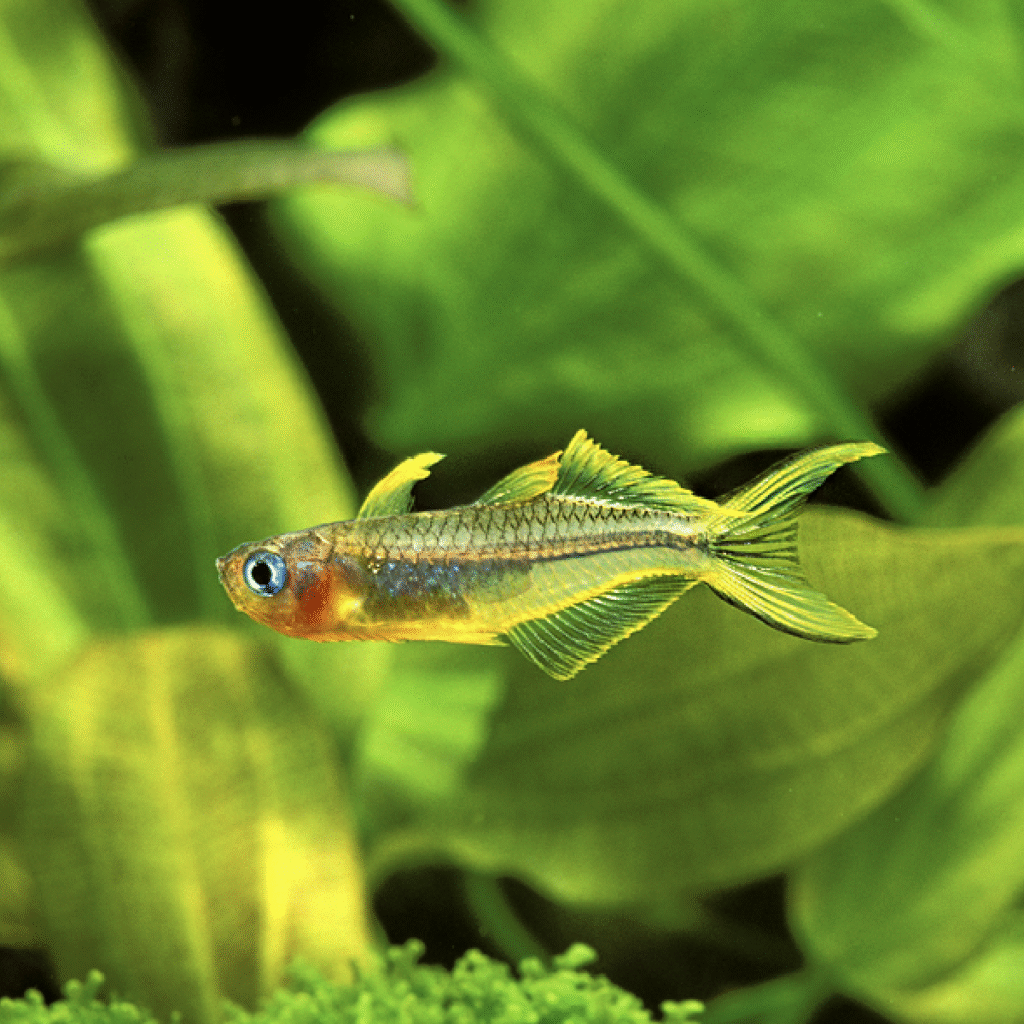
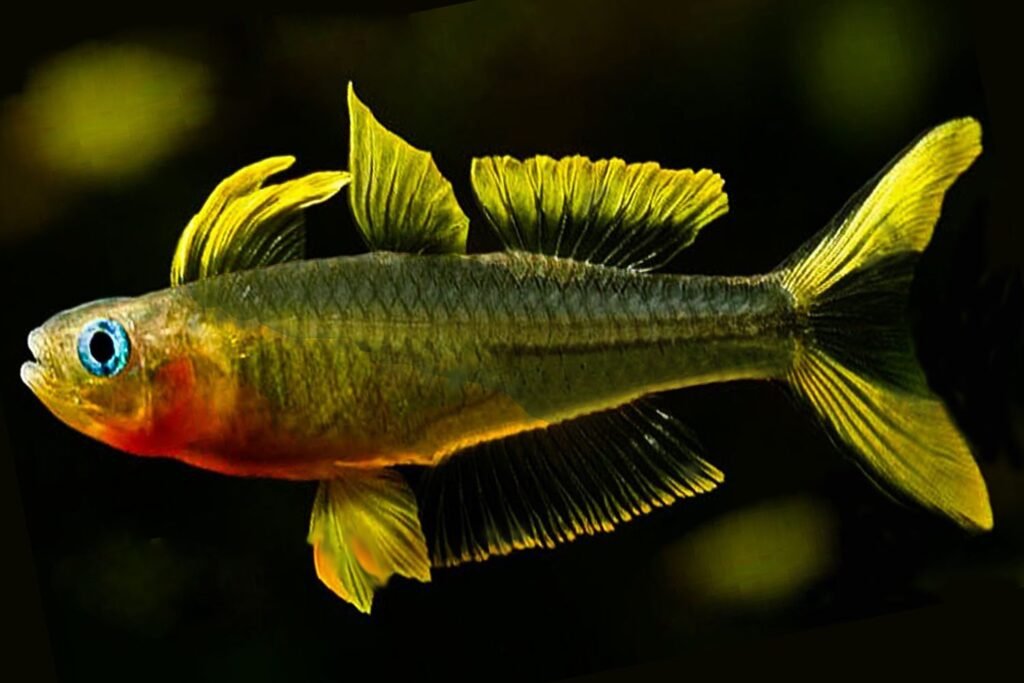
Pseudomugil furcatus rarely exceeds five to six centimeters in length, yet its presence commands attention. When a group darts together, they resemble a flurry of tiny gemstones. Males glow with electric blue accents that highlight the upper body and eyes, while streaks of yellow illuminate the dorsal and anal fins. Under aquarium lighting, these colors shimmer as if floating in the water itself.
Females contribute a softer beauty. Their fins appear nearly glass like, with delicate warm tones that capture and redirect ambient light. The forked tail, which gives the species its common name, splits into elegant upper and lower lobes that twist gently with the current. This distinctive shape creates a flowing, effortless movement through the water, giving each fish an almost ethereal quality.
Social Behavior and Schooling Dynamics
In both the wild and the aquarium, Forktail Blue Eyes behave with lively curiosity. They form loose but active groups that ripple together in coordinated bursts of motion. These schools create a sense of rhythm and social connection that brings their environment to life.
Males often take center stage with graceful courtship displays. They extend their fins, quiver slightly, and glide in sweeping arcs around females or other males. These moments of color and movement feel like tiny aquatic fireworks. Although competitive, these interactions rarely escalate and instead serve to highlight the natural energy of the species.
A group of eight or more reveals the full beauty of their behavior. With enough space, they will explore every part of the aquarium, weaving patterns that shift with the flow of the water.
Aquarium Requirements and Water Parameters
An aquarium designed for Pseudomugil furcatus benefits from a sense of softness and natural structure. A forty liter planted tank works especially well, since plants help mimic the complexity of their native streams while offering security and grazing opportunities. Fine textured plants, root like wood pieces, and floating vegetation cast gentle shadows that calm the fish and encourage confident movement.
Temperatures between seventy two and seventy eight degrees Fahrenheit match their natural environment. Soft to moderately hard water with a neutral to slightly acidic pH keeps them comfortable. A gentle current provided by a filter outlet or small pump helps simulate the flowing water they evolved in. Clean water is essential, and regular maintenance sustains the clarity and stability they need.
Feeding and Nutrition
In the wild, Pseudomugil furcatus feeds on minuscule life that drifts through the water. Insects, micro crustaceans, and larvae make up much of their natural diet. Their small mouths restrict what they can consume, which means aquarists should select food with care.
A varied diet of micro pellets, finely crushed flakes, and frozen options like cyclops or daphnia keeps the fish vibrant. Live foods such as baby brine shrimp or microworms stimulate natural hunting behavior and intensify the colors displayed by males. Several small feedings throughout the day best mimic their continuous grazing habits in nature.
Breeding Behavior and Reproduction
Breeding Pseudomugil furcatus is a rewarding experience for aquarists. Males brighten noticeably when ready to breed and increase their display frequency. The species lays adhesive eggs on fine plants or spawning mops without providing parental care. This scatter spawning strategy spreads risk in the wild, with eggs hidden among dense aquatic growth.
In an aquarium setting, eggs can be collected from spawning mops and transferred to a separate rearing container. Fry hatch after a short incubation and require extremely small foods such as infusoria or freshly hatched brine shrimp. Gentle flow and clean water support early development.
Ideal Tankmates
Pseudomugil furcatus interacts peacefully with many nano species provided they share similar environmental needs. Gentle tankmates such as small rasboras, pygmy Corydoras, dwarf rainbowfish, and non aggressive shrimp coexist without stress or competition.
These combinations create layered movement within the aquarium. Bottom dwelling fish contribute steady foraging behavior, midwater species form active schools, and shrimp provide quiet interest along the substrate. This balance helps the Forktail Blue Eye maintain natural patterns of movement and exploration.
Conclusion
Pseudomugil furcatus is more than a tiny aquarium fish. It is a living connection to one of the most biologically and culturally rich regions on earth. Through its shimmering colors, lively schooling behavior, and gentle personality, it allows aquarists to experience a hint of Papua’s radiant landscapes and deep natural heritage. With proper care and appreciation, this species brings movement, elegance, and a sense of wonder to any freshwater aquarium.
